Written for and originally published on BioSpace
BioSpace spoke with Paula Ragan, CEO and President of X4 Pharmaceuticals, a company focused on restoring healthy immune system function in people with rare diseases. X4’s lead product candidate, mavorixafor (X4P-001), is a potential first-in-class inhibitor of CXCR4.
Q: What are your daily activities as CEO and President of X4 Pharmaceuticals?
A: My role is to be captain of the ship: picking a destination, getting people on board and then hopefully getting some wind in the sails. On a day-to-day basis, I have the great opportunity of communicating our vision to do something meaningful for patients, even if in casual conversations or, obviously, in a more visionary form in town halls. Getting on board and getting people on board, is a constant interaction. It’s a constant team effort. It’s a constant way of communicating, inspiring, aligning, arguing and presenting different sides. The wind in your sails? That’s our investors, our patients, our external constituents like regulators and key opinion leaders (KOLs). Every day I have some form of interaction with those parts of our world. I try to keep people interested and wanting to spend time with us because time is the most precious thing for all of us. So, getting people engaged and keeping that wind in our sails so we can keep moving forward is part of my job, too.
Q: How did you choose to work in biotech?
A: I’ve always, even since I was young, really liked building things to help people. I was always trying to build something that could help my parents out with a particular project or problem that they were having. And then as I emerged in my own appreciation for academics, I really liked science and engineering and kind of married those two through my academic career. When I started to learn about biotech and drugs, I thought wouldn’t it be perfect if you could regrow a limb instead of rebuilding one? So I really got excited about drug development and went down my career path there. When I think about biotech, I actually don’t particularly think about biotech as a modality like a gene or a cell therapy. I just think about it as innovation.
Q: What experience do you have in the field?
A: I came from Genzyme, when Henry Termeer, the godfather of all things rare disease was there. I had the privilege of working with him. I have a great appreciation for Genzyme and work in rare diseases. That’s where I really had my sort of baptism into what rare disease really means. And the company was so good about having the patient first, in my mind, in working on amazing drugs that really changed the lives of so many people.
Q: Tell me about what’s happening at X4 right now.
A: The particular diseases that we’re most advanced in are WHIM syndrome and a rare blood cancer called Waldenstrom’s macroglobulinemia. Both of those diseases arise from a genetic dysfunction from a genetic mutation in the CXCR4 receptor. And so, they’ve almost presented themselves to us. We had a drug that we knew could act and turn down the receptor. These diseases are diseases caused by the receptor turning on too much. It was almost as if there is a marriage of the mechanism of the disease, and we have the one solution. So that’s really how we started these initial studies. As we’re learning more about the drug in patients, there are also some broader opportunities to go with. But we’re going with the most targeted approach first, and then as we learn about the drug, we’ll consider broadening out.
Q: When you speak of broadening out, do you have anything in mind?
A: There are some other types of diseases of the immune system that cause very low white-blood-cell counts, and our drug absolutely increases white-blood-cell count. We think we have some other opportunities. Severe congenital neutropenia is a disease patients are born with, with very low neutrophil counts. We think our oral once-a-day therapy has the potential to help those patients as well. It can go much, much beyond that. People are very interested in boosting the immune system in oncology if you check on all the checkpoint inhibitors. There’s been some early work where our drug could help there as well. So there are some early-stage studies that could open up that door which could be obviously an easy door to go through as the data emerges.
Q: What’s the best part of your work?
A: I think it’s a little bit of the unsung hero aspects of these patients. I don’t like people defining the importance of a disease based on the number of patients. Everyone’s individual disease is hard on that individual person. And so, I really look at it at an individual level. I want people to feel like they have a champion. I think it’s got to be even worse to have some of these diseases that people dismiss like it doesn’t matter just because there aren’t more of you. I just can’t even imagine that. One of our patients that we’ve had the good fortune to meet, sent us a video to say thank you for what we’re doing. I kind of just like championing maybe the underdog or the giving of a louder voice, because the disease is important. It’s important science regardless of how many are there – I’m excited about what we’re doing because it’s not only about WHIM syndrome or even WHIM and these other diseases, but we’re learning about the immune system. Everything that we learn from these trials might open up a door for somebody else’s treatment. I feel like it’s a really good lens for delivering something meaningful shorter term, and then longer term, it can open up doors in ways we don’t even know yet. So it really resonates a lot with me.
Written for and originally published on AGT
Big Picture
Gene therapy, stem cell therapy, CAR T, cell therapy, and gene editing are all forms of genomic medicine1 – an approach to cure and treat human diseases that uses human biology rather than chemical compounds made in the lab. All of these tools are unlocking techniques and therapies with the power to cure formerly incurable diseases. Their use is ushering in a new era of healthcare.
What Is Gene Editing?
Gene editing is a group of technologies being used by scientists to change the DNA of an organism, such as human beings, plants, and bacteria. While other forms of genomic medicine work with genetic material without physically altering the DNA, gene editing makes functional changes – known as edits – to the DNA at a specified point. To make these additions, deletions, and alterations in the genome, gene editing requires the use of a gene-editing technology.
One widely known gene-editing technology is called CRISPR (clustered regularly interspaced short palindromic repeats).
How Does CRISPR Work?
CRISPR technology is based on a natural defense mechanism of bacteria and single-celled microorganisms. Researchers Jennifer Doudna and Emmanuelle Charpentier received the Nobel Prize in Chemistry in 2020 for their work in developing this precision genome-editing technology. When CRISPR is mentioned, it is often linked with Cas9, one of the proteins that helps to target and cut the stretch of genetic code that will be edited. Doudna and Charpentier modified the targeting code by which CRISPR recognizes the DNA from viruses to locate and cut specific sections of DNA.
CRISPR gene editing uses Cas9 genetic scissors to cut the DNA at a specified point. As illustrated in Fig. 1, below, once the cut is made, there are two possible outcomes.
- The cell can repair itself – leading to repair errors which functionally turn off or break the gene.
- Researchers can insert a new DNA template for the repair, introducing a new function into that part of the DNA.

Gene Editing vs. GMO
It’s likely you’ve read about Genetically Modified Organism (GMO) foods. In GMO foods, the DNA from one type of organism is added to the DNA of another to create a chimera that has characteristics of both. With gene editing, a change is made to the DNA of an organism. For instance, “deleting or turning down a gene, such as the one responsible for turning sliced apples brown, does not introduce foreign DNA and thus is a non-GMO method. Similarly, altering the expression of a gene related to pest resistance in a variety of sweet potato to make it more resistant, could be a non-GMO method.”2

Ethical Considerations
When CRISPR has been used in human experiments to date, it has been applied to the somatic cells. Changes made to these cells cannot pass to the next generation. The use of CRISPR or other tools to edit the germline (cells of the sperm and egg) is under discussion as a matter of practical and ethical concerns, since changes to the germline will affect all generations to come. Doudna’s TedGlobal Talk on the topic details her concerns.
The Upside
What if genomic medicine were able to restore a gene that is missing in the eye causing blindness? What if we were able to add a receptor to your immune system to target cancer? What if I child who would most certainly pass away before turning 4 years old, was just missing 1 gene? Could this technology play a role in restoring that gene and saving that child’s life? I just described three technologies which are FDA approved and actively being sold in the United States curing a type of blindness, cancer, and a fatal rare disease.
- Luxturna – Therapy for a type of blindness caused by a single gene
- Kymriah – Genetically modified immune cells targeting cancer
- Zolgensma – A life saving restoration of one gene in the central nervous system
All of these tools are unlocking whole new areas of medicine and therapies with the power to cure formerly incurable diseases. Their use is ushering in a new era of healthcare.
Sources:
1 National Human Genome Research Institute – Genomics and Medicine
2 NC State University, CRISPR Plants: New Non-GMO Method to Edit Plants
Written for and originally published on smile CDR
The COVID-19 pandemic is far from over, yet with vaccination programs well underway and an end to rising infections in sight, we now have the opportunity to assess whether there was adequate access to vital health information by those in charge of the pandemic response. Specifically, were those providing care, those creating guidelines, and those doing research able to obtain the data they needed to inform their decisions? This information is important for our understanding of what could be done to improve the response to the next global health event. It is also important to explore the ways that improvements in the availability of data can be made to meet the goals of the 21st Century Cures Act, as well as whether the time and effort will be worth it for healthcare systems that are already under budgetary constraints.
Cures Act
The 21st Century Cures Act is a driving force for digital transformation in healthcare. Signed into law in December 2016, its purpose is to ensure that medical advances and innovations reach patients faster and more efficiently. The ONC’s Cures Act Final Rule supports “seamless and secure access, exchange, and use of electronic health information”. At a practical level, this can only occur when the data structure supports interoperability and information blocking is eliminated so that legitimate parties can access the digitized records they require. Beginning April 2021, the Cures Act requires that clinical notes must be made available free of charge to patients. With this in mind, what we glean from our experience with COVID-19 can make this a robust transition with the flexibility to serve as yet unidentified future needs.
A Common Language
At the base of any data-sharing initiative is the common requirement for patients, caregivers, public health officials, and researchers to have access to health data in real-time. During the COVID-19 pandemic, this need has highlighted the importance of open data standards for the exchange of digitized healthcare information at each level of the pandemic response, in combination with APIs (Application Programming Interface) to serve as an intermediary between the data and the users. In particular, the COVID-19 pandemic has demonstrated the benefits of the HL7 FHIR (Fast Healthcare Interoperability Resources) specification when data sharing is essential—as it soon will be under provisions of the Cures Act. Essentially, FHIR fills the need for all involved parties to have data that speaks a common language.
FHIR
FHIR makes it possible for different systems to “speak” to one another when exchanging data by coordinating the data flow at seven levels. This integrity in the data structure is essential if users are to access the data they need and have trust in that data:
- Physical: Connects the entity to the transmission media
- Data Link: Provides error control between adjacent nodes
- Network: Routes the information in the network
- Transport: Provides end-to-end communication control
- Session: Handles problems that are not communication issues
- Presentation: Converts the information
- Application: Provides different services to the applications
APIs
Once the health data is digitized and aligned with FHIR, there is still the job of interfacing with the data before it is used by a specific API. SMART on FHIR standardizes the process through which calls to the data are made. It allows healthcare organizations to focus on the user experience for their staff and patients rather than the mechanism for communication with the data.
Time & Money
Time. Money. Those are two resources in short supply in healthcare systems – especially during the COVID-19 pandemic. Yet, a recent report from the Pew Trusts underscores the importance of FHIR and APIs despite the time and money involved in the initial creation of the system. The report states, “Hospitals and labs might argue that they are stretched too thin by high caseloads and test volumes to be able to improve their digital record systems now. But sharing information in rapid seamless electronic means is critical to the country’s public health response, and health care facilities and labs can update their existing record systems with minimal time and expense.” It’s also evident that those healthcare systems and localities with the ability to aggregate patient data were better able to use that data in planning a science-driven response.
All-or-Nothing
Given the need to meet the Cures Act requirements, the growing use of portals to provide patients access to their records, and the steady stream of apps for consumers to track every aspect of their health, the growing need and demand for interoperability is undeniable. The Pew Trusts report also addresses the concerns of healthcare systems that lack the resources to go all-in at one time. The report points out that it need not be an all-or-nothing process. In fact, “… [M]any [hospitals and labs] have already deployed technology that allows facilities to send their test results to one system and then automatically route them to the correct public health department. To address the concern that modernizing technology to improve information sharing is too burdensome during the pandemic, the requirement could be limited to COVID-19 reporting for the duration of the public health emergency. This would allow healthcare providers—who have been wary of penalties for information blocking—to focus resources on upgrades needed to support pandemic response.” It’s entirely possible that some of the work is already underway between departments in the healthcare system.
In Action
One useful step to committing to FHIR is the ability to see what benefits it would bring to a specific organization. The HAPI FHIR Pandemic Rapid Response Toolkit: Customizable, Open Source Apps for Clinicians, Developers, and Public Health Authorities is a resource addressing the need and ability of international caregivers to identify and agree upon the data that is required for a coordinated response. Since those requirements will begin at the patient level, this exercise presents an opportunity to create systems that benefit all participants in the healthcare system. It was evident early on with COVID-19, that a coordinated response at the local, state, national, and international levels was required. With a specification standard like FHIR, health systems would input data once at the patient level, with the individual’s identification appropriately masked, but available at all other levels. By leveraging open data standards, like FHIR, along with other complementary technologies like APIs, the requirement of the Cures Act can be implemented to meet the needs of individual patients while improving the quality of public health responses to future large-scale events.
Written for and originally published on AGT
The ability to consistently bring treatments and cures to market depends upon a company’s capacity to create and sustain a successful product development pipeline. Traditionally, pharmaceutical companies have developed small molecule medicines such as Zantac or Lipitor to treat conditions such as heartburn or high cholesterol through a trial and error process that begins without the end in mind. With gene therapy companies, a specific target is often the starting point for cutting-edge, next-generation treatment options. These treatments employ proven techniques such as viral vectors to bring about a commercial product to act on a specific target. Whichever approach is taken, the research portion of the drug development process is time-consuming and costly. With the increased interest in gene therapy, much of the research is performed at the university or research organization level. When a treatment approach shows promise, intellectual property that has been developed at the university is sub-licensed to a corporate entity to further the development process. This use of technology transfer is fueling the current gene therapy boom.
The Path to Drug Approval Via Technology Transfer
The path through drug discovery and approval via technology transfer is one in which those specializing in tech transfers or part of the organization’s technology transfer office arrange for cooperative research and development agreements that safeguard their intellectual property rights. The experience of Spark Therapeutics exemplifies a successful tech transfer. In this article, we will explore the pathway that their product, Luxturna (voretigene neparvovec-rzyl), navigated to become commercialized.
01. Academia
In 2013, the Children’s Hospital of Philadelphia (CHOP) technology transfer program arranged the transfer of developing gene therapies for unmet needs in genetic diseases, including blindness, hemophilia, lysosomal storage disorders, and neurodegenerative diseases. The transfer resulted in the formation of Spark Therapeutics.
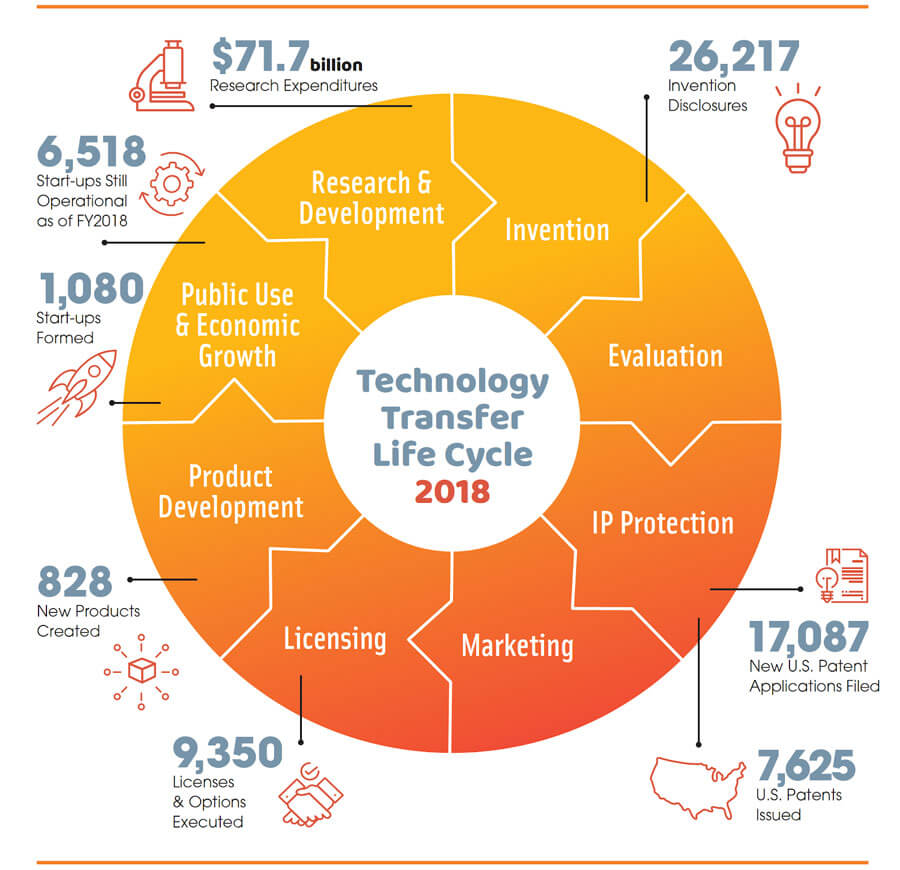
The arrangement between CHOP and Spark is part of a growing trend due to the reemergence of gene therapy and the role played by technology with commercial potential that is the result of research in academia. Through the technology transfer process, universities and other research institutions arrange for intellectual property protection, the establishment of start-ups, or other licensing and sharing agreements that will advance the research from the early stage through the development pipeline. In 2018, $71.7 billion in research expenditures for health and other technologies resulted in an impressive number of inventions, U.S. patent applications filed, and other work products as seen in Fig. 1.
02. Start-up Companies
Start-up companies are nothing new in bio. Biotech company Spark Therapeutics was founded in March 2013 as a commercial company to develop the technology and know-how accumulated at CHOP. Their vision was to create a world without genetic disease. Their mission was to discover, develop, and deliver the treatments that had been “unimaginable – until now.” Spark used adeno-associated virus (AAV) vectors to deliver their gene therapy to such targets as the cells in the retina, liver, and central nervous system. They produced the AAV vectors in-house and brought one product, Luxturna (voretigene neparvovec-rzyl), the first gene therapy for a genetic disease in the U.S., to FDA approval in 2017 and EU approval in 2018.
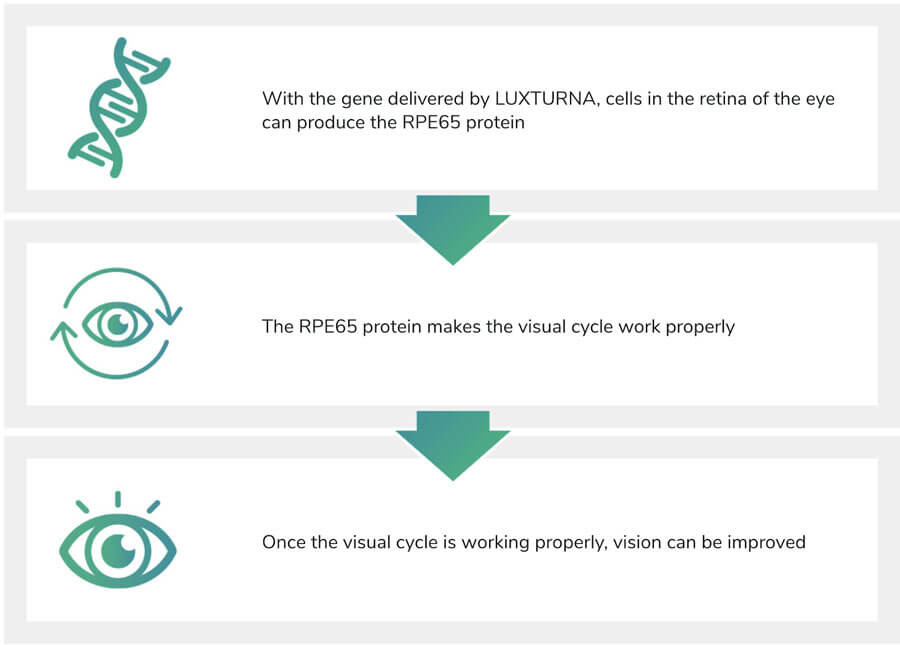
As illustrated in Fig. 2, when delivered to the cells in the retina of the eye, LUXTURNA produces the protein required to correct the damaged visual cycle. Once the cycle is corrected through this retinal treatment, vision can be improved.
03. Mergers & Acquisitions
It is not unusual for successful smaller companies to be acquired by or merge with larger pharmaceutical companies in order to expand the range of therapies offered by the larger company. This was certainly the case for Spark, which was acquired by Roche for a total of about $4.8 billion in December of 2019. Spark is viewed as a good fit for Roche since its gene therapies for hemophilia A, SPK-8011, complement Roche’s own Hemlibra.

The acquisition was made after FDA approval for Spark’s LUXTURNA indicated that Spark had a viable approach that could result in approvals for other therapies in their development pipeline. This attracted the attention of Roche Holding AG, the Swiss multinational healthcare company with a market cap of about $280 billion as of April 2021.
Bottom Line
The technology transfer process can work to the benefit of both the organization doing the preliminary research and the company or companies involved in the next phases of drug development. As reported by Fierce Healthcare and Advisory Board on February 27, 2017, Children’s Hospital of Philadelphia (CHOP) was able to turn its $33 million investment in Spark Therapeutics into $446 million. The Roche acquisition of Spark made it possible for the hospital to not only recoup its initial investment in Spark but also to realize a sizeable gain that can be used to fund new research projects.
Take Away
The evolving drug development paradigm for gene therapy products is dependent upon the initial investment of universities and other research institutions funded by the government. These entities, which traditionally have focused on research without a specific interest in a financial return, now have a significant incentive to explore areas of interest with potential for commercialization. With a view to an eventual acquisition, merger, or another form of financial remuneration, a question of growing concern is whether research will be conducted in its purest form and if that is even the right thing to do.
Sources:
Decades ago, a child with a rare disease would struggle and ultimately die without a diagnosis. Today we have the ability to test for genetic mutations that create symptoms that match those presented in the child. This identification results in a diagnosis and yet, although parents today know the source of their child’s disorder, they are regularly told that no treatment exists. While this is true, with today’s technology, researchers could create a viable therapy or cure. Unfortunately, the cost of the research, development, and trials for each child is millions of dollars that parents must raise to move the process forward.
It is within the reach of current technology to develop a treatment – perhaps even a cure – for a child with a rare disease. The problem is that creating that treatment costs millions of dollars.
To eliminate cost as a prohibiting factor, it’s imperative to examine the cost elements and what can be done to reduce them. In the posts that follow, I’ll speak with Rare Disease Parents, specialists, and researchers as well as to the regulators overseeing treatment development and trials to learn their perspectives on possible avenues to create a more affordable model for ultra-rare disease therapies.
Until then, read about what several Rare Disease Moms are working on now:
Amber Freed – Milestones for Maxwell – SLC6A1
Rare Disease Moms Make Their Voices Heard – SLC-6A1, PKU, Krabbe
You have probably heard mention of viral vectors in connection with gene therapy and biotech. Just what is a viral vector? Well, look at it this way. You have something you want to deliver to someone else. You can put the message in magnetic form on storage media, write it down and send through snail mail, alter a plasmid and use bacteria to send it … You get the idea. You can also slip it inside a virus that has been rendered harmless and use that to deliver that something to someone else. Using a virus for this purpose is known as using a viral vector.
What?
Viruses are usually associated in our minds with thing make us sick, e.g., COVID and the common cold. But fundamentally a virus is an organism that is incapable of replicating on its own. It has evolved to be able to carry its genetic material into healthy cells, where it then is replicated along with the cell.
How?
Researchers wondered why they couldn’t scoop out the harmful genetic material in a virus, slip in some beneficial DNA, and re-introduce the virus. All that involves some very interesting science, but the bottom line is that we now have the ability to “turn” a virus from an agent of doom to an agent of good.
Which?
Not all viruses fit the criteria. For one thing, it has to be a virus that a person hasn’t already encountered. Why? Because if the person has developed an immune response to that virus, it will destroy the virus before it has a chance to insert the beneficial material. It also has to be a virus that we understand – thoroughly. Why? Because we’re introducing it into the human body. If we don’t understand the mechanism and the way it works in the human body we could do a lot of harm while trying to do a lot of good.
Types?
You can see more about them in the video from ASGCT below, but the bottom line is that:
Adenoviral vectors (AdV) were the first used in gene therapy. These viruses are the virus that causes the common cold. Since these AdVs caused some serous immune reactions in patients, they are now under study for future use.
Lentiviral vectors (LVV) are a species of retrovirus – using RNA rather than DNA – that inserts their genetic material in a number of ways. Because of this, they are mainly used outside the body with the modified cells being infused into the patient.
Adeno-Associated Viral (AAV) vectors have gained interest since about 2012. These viruses do not become a permanent part of the DNA receiving the vector. They also carry a small “load,” making them good for some purposes but not for others.
For a deeper dive into viral vectors right now – bluebird bio’s genehome | Gene Therapy Net | PubMed | NIH National Institute of Environmental Health Sciences