Maryland-Based Bio-Trac has Provided Advanced Training for Research Scientists for over 33 Years
There is a company in Maryland that has been on the cutting edge of biomedical research training for over 33 years. This company has trained more than 17,000 bench scientists from all corners of the globe, providing them with the latest techniques and skills needed to move their research forward and push the boundaries of scientific possibility. This company is Bio-Trac.
So how is one company able to make such an impact on so many biomedical research scientists while maintaining a track record of educational excellence? It all started with the ideals of one well-respected scientist, Roland Nardone, Ph.D. He was a man who believed in the value of continuing education, was a stickler for proper procedures, and had the foresight to consistently spot the next big thing in research.
In the late 70’s and early 80’s, Dr. Nardone was asked to conduct tissue culture related training workshops at the National Institute of Health on behalf of NIDDK and EEO. Later on he established a training center at Catholic University in 1984, The Catholic University’s Center for Advanced Training in Cell and Molecular Biology (CATCMB). “The first training course was on cell culture techniques,” recalls Dr. Nardone’s colleague at The Catholic University, John Golin, Ph.D. ”That training led to additional workshops in immunology and Recombinant DNA Methodology”.
Dr. Nardone started conducting training workshops at the NIH where there was space for additional workshops. “He had a built-in audience there,” Dr. Golin says, “and he continued to invite his colleagues from Catholic to lead workshops.” Dr. Nardone’s reputation in the field also made it possible for him to attract subject matter experts from around the country to be part of the teams that taught each workshop. “My father believed in a team approach,” says his son Mark Nardone. “He believed there was value in having more than one voice speak on a topic.”
Dr. Nardone realized there was a need for intensive training in the latest technologies. He believed that proper training and a consistent approach to the new methods developed in the field would yield long-term benefits. Scientists would have a uniform set of tools and procedures that allowed them to communicate with one another within the same context. Equipment manufacturers would know that their materials were being utilized properly in the lab for best results. Labs could expect that the bench researchers they hired had a working knowledge of the intricacies of the tests they would perform. All in all, standards and training in protocols would elevate the reliability of the results of work in the lab, saving money and maintaining public confidence in the reliability of study findings in the process.
In 1985, Dr. Nardone invited his son to join him in founding Bio-Trac. Mark Nardone was well aware of the excellence in training his father envisioned. Early on, Mark had worked in his father’s lab. “I knew from personal experience that my father emphasized the importance of sterility and proper cell culture technique and insisted that these practices be followed,” explains Mark with a laugh. “I had to demonstrate the ability to subculture cell lines on a lab bench instead of in a hood without introducing a contamination into the culture. Once it was proven over a length of time that I could do this, I was allowed to use a tissue culture hood for subculturing.”
Bio-Trac’s reputation for providing meaningful training on the latest techniques grew over the years. Their name was not only respected within the academic and government community but within industry circles as well. Some of the top biopharma industry leaders began hiring Bio-Trac to provide custom training programs for their research teams to ensure their researchers were using the very latest techniques and had the skills they needed to move their programs forward.
Over 17,000 researchers from all 50 states, and from dozens of countries around the world have since traveled to Maryland to receive advanced training at Bio-Trac workshops. The workshops continue to cover topics that are on the cutting edge of research, led by some of the foremost experts in the field. The quality of the courses, the expert instructors and the hands-on nature of these workshops continue to put Bio-Trac on a higher level than other such programs. Some of the most recent offerings focus on Gene Editing with CRISPR; Single Cell RNA-Seq; RNA-Seq; Epigenetics as well as numerous iPSC and NGS related workshops.
While growing Bio-Trac, Dr. Nardone continued his efforts for the creation of cell line authentication protocols. He was a founding member of the International Cell Line Authentication Committee and, in a 2007 open letter to the US Department of Health and Human Services, he detailed his concerns and recommended solutions to the problem. In fact, many in the cell-line authentication community regard the 2016 passage of NIH guidelines based on his concerns as the highlight of his professional career. However, many fathers and scientists alike would revere as his greatest legacy, working with his son every day and building a company that has had such an impact on the careers of thousands of scientists.
Roland Nardone passed away in 2018, but the ideals that he believed in have remained as the bedrock of Bio-Trac’s culture. Mark Nardone continues to expand the company, celebrating his father’s life by maintaining the integrity, and attention to detail, that are Bio-Trac’s hallmarks. Inheriting his father’s knack for spotting the next big thing, he continues to deliver cutting-edge research workshops in the very latest technologies, ensuring that Bio-Trac will have an equally great impact on the lives of the next generation of biomedical researchers.
Published on BioBuzz
Pasco Memorial Hospital has served the greater Pinto area for nearly fifty years. They have a large endowment from a local interfaith fund. The endowment makes it possible for Pasco Memorial to provide care that is charged on a sliding scale. The only requirement the fund puts on the hospital is that it controls costs through the use of stringent inventory control and efficiency in patient care systems. (more…)
The local firm committed to meeting the essential needs of the BioTech community.
You’ve probably seen the Roberts Oxygentrucks on the road around Maryland for years. They are easy to spot because they are always delivering. This family-owned business has had a sterling reputation for reliability and excellence for over 50 years. They attribute that to their focus on meeting customer needs, and always having a “live” person to answer every incoming call. For those in the biotech industry that’s a win-win. Not only will Roberts Oxygen deliver what you need on the schedule you set, but they also stand ready to help you out if you’re in a jam; which they’ve done on many occasions.
To better serve the biotech community, Roberts Oxygen recently made a major investment; with a new state of the art DRY ICE PRODUCTION FACILITY. This represents the only commercial DRY ICE production in Montgomery County. Biotech processes require sufficient quantities of dry ice to maintain subzero temperatures for their specimens. Because the production facility is located in Roberts Oxygen’s Gaithersburg facility, local biotech firms can now have their dry ice delivered the next business day (or SAME DAY if needed).
It is important that the dry ice can be delivered promptly because all dry ice gradually loses its cooling power, even when it is properly packaged. The ability to obtain dry ice directly from the source within one or two days of its production is the key to having a product that is at its peak performance; something that Roberts’ can now guarantee with this new facility. Not only that, but biotech companies in the BioHealth Region are now able to purchase dry ice not only from a local company but also from a local company with a stellar reputation and commitment to customer service.

Dry ice machines use liquid CO2stored in a 50-ton tank, to produce dry ice. As the ice falls into the 500-pound insulated container below, it breaks into smaller pieces known as pellets or rice. When the bin is full, it is closed and then wrapped in plastic to ensure a tight seal until and during transport. Customers can have deliveries on a regular schedule, or as needed. Dry ice is also available at Roberts Oxygen retail locations where it is sold by the pound.
Roberts Oxygen offers a full suite of Lab Gases available to the growing biotech community. In fact, sitting outside their factory are 50 brand new 240L refillable Liquid Nitrogen Dewars that will soon make their way to labs across the state. Also an integral part of biotech processes, liquid nitrogen is used to maintain the subzero temperatures required for sample storage and transportation. Seeing so many dewars ready for deployment is not only a sign of the health of their business, but that of a very robust biotech sector that saw banner growth in 2018 across Maryland.

With this new investment, Roberts Oxygen is ensuring a supply of high quality dry ice to the regional biotech community. Combine that with their proven excellence and reliable delivery schedules and it’s a win-win for the BioHealth Capital Region.
Visit Roberts Oxygen for more information on their dry ice facility, or any of their other products and services.
Published on BioBuzz
The BREP program at UMD provides much-needed biotechnology industry training workshops that support the growing demand for biomanufacturing and process development talent the BioHealth Capital Region and beyond.
With facilities in College Park and Rockville, Maryland, the Biotechnology Research and Education Program (BREP) at the University of Maryland offers a range of industry-oriented biotech training programs at GMP-like scale-up facilities.
BREP Training Workshop
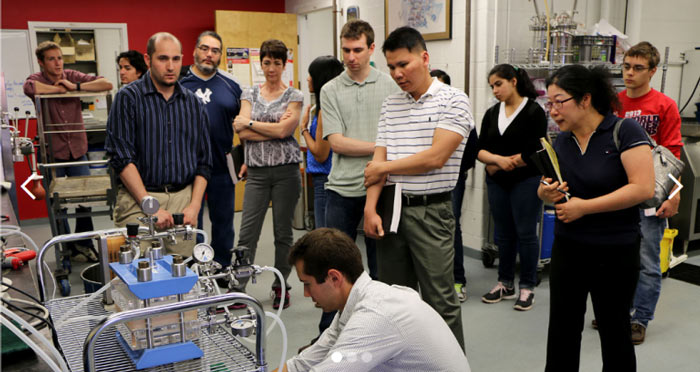
Whether you are entirely new to the industry and trying to figure out how terms like process development, mammalian cell lines, and protein purification apply to what your company does, or you’re currently working in a GMP environment and looking for a way to grow your skills and knowledge to advance your career, BREP has programs for you. They will even customize training programs to meet the specific needs of companies that have to upskill and train their existing workers or new hires.
With more than 1,200 new biotechnology? jobs forecast for the region in the next year or more, BREP’s programs could play an important role. They can provide a solid jump-start to hires lacking experience in the bio-manufacturing and process development space. BREP training saves a company’s time and money by ensuring that their people, new hires and experienced alike, have the skills they need to be successful in a GMP environment. Their programs could also make hiring an otherwise qualified person who lacks a depths of skills in biomanufacturing less risky; that person can be brought up to speed by the team at BREP.
Who’s Hiring?
The region is seeing job growth everywhere, but these companies are all projecting to grow by the hundreds of new hires. It’s job growth like this that makes BREP’s program a critical component of the region’s workforce strategy.
• Paragon BioServices
• Autolus Therapeutics
• Emergent BioSolutions
• GSK BioPharm
• Kite Pharma
• RegenXbio
• Supernus Pharmaceuticals
Ben Woodard has been at with the program since 1997 First with the Bioprocess Scale-Up Facility (BSF), and now as director of BREP, his delivery of training has earned BREP recognition across the state. Regular course offerings include those in Fermentation, Downstream Processing, Cell Culture, and Analytical Sciences. A customized curriculum is available to companies with a specific need. In addition, as jobs become available in the biotechnology sector, basic courses are being considered. These would make it possible for companies to provide employees throughout the organization with a foundation in the principles and methods that drive the company’s growth.
BREP can also serve as the development arm of small companies, making it possible for these companies to serve larger clients without investing in space and personnel. Companies such as MedImmune, Paragon BioServices and Martek all took advantage of these solutions at their early stages.
BREP is part of the National Institute for Innovation in Manufacturing Biopharmaceuticals (NIIMBL) initiative, a public-private partnership dedicated to advancing biopharmaceutical manufacturing innovation and workforce development. NIIMBL is one of 14 institutes in the Manufacturing USA network.
The original intention of BREP was for UMD to help Maryland companies scale up their products and processes. That mission has evolved to include workshops and customized training, as well as educating a biotech-ready student workforce. BREP’s work will be more important than ever as biotech manufacturing continues to grow with the BioHealth Region.
Upcoming Biotech Workshops
June 10-11, 2019:
June 12-14, 2019:
June 17-18, 2019:
Published on BioBuzz
In order: Phil Vanek, PhD (GE Healthcare); Claudia Zylberberg, PhD (Akron Biotechnology); Joshua Hare, MD (Longeveron); Doug Doerfler (Maxcyte) participate in the “Realizing the Potential of Stem Cell Therapies” panel at the TEDCO Entrepeneur Expo
The TEDCO Stem Cell Symposium included several speakers and panels covering the most important topics that researchers and business are facing. These topics ranged from the promise of new Stem Cell therapy technologies to overcoming the current challenges in Translation, Scale Up, and Commercialization. During the Commercialization panel, moderator Phil Vanek (Cell and Gene Therapy Strategy at GE Healthcare) asked about the potential scale of Stem Cells. Panelist Joshua Hare (Longeveron), was quick to reply, “The scale is enormous. I personally believe cell therapy will replace all modern medicine.”
While fellow panelists Claudia Zylberberg (Akron Biotech) and Doug Doerfler (Maxcyte, Inc.) did not necessarily join Hare in this conclusion, the panelists – each of whom has been involved in successful cell therapy-related businesses – were in consensus on a number of the hurdles that companies must be overcome to successfully get their products to patients.
One of the biggest hurdles is funding. Zylberberg noted that it is often difficult for traditional venture capitalists to adjust their thinking to the very long time frame involved in taking technology through translation and scale up, and on to commercialization. Hare added that he’d encountered “investors that love what you’re doing but it doesn’t fit their investment model.” The view was that venture funding would come more readily when there was more experience with the biotech commercialization process.
Another hurdle is the public perception of the technology. Patients are often reluctant to be the first adopters. As a result, it often takes time for the new process to be accepted. “As more people use it, the public opinion changes,” said Doerfler. The timeframe for this depended upon a number of factors, but Hare said, “in two to three years, Stem Cell products will be treating people with metabolic syndromes by IV.”
The hurdle of adoption by the medical community is also large. “Once the product is approved, there needs to be a re-education in the medical community.” Some of this re-education will necessarily include recognition of the more central role patients play in their care today. If there is a treatment they desire, they will request it from the physician. Zylberberg said, “We must not underestimate the power of the patient. They will push quite a bit themselves for what they’d like to see.”
The security of data collected in the research and development process is a definite concern. The data must be kept confidential while still being accessible by other teams wishing to use the data for their own studies. Once consent is given, there is still the issue of storing the data in a model that will fit the purposes of multiple groups. There is also the question of what to do if materials are screened and something unsought is found. Coincident with this question is the question of whether the screening is done once only, or will be done in the future, to look for new indicators – indicators that are unknown today.
Finally, there is the problem of getting the product to market once all of the other hurdles have been cleared. When asked what the most important part in success was, the panelists were in complete agreement. The team is most critical to success. The earliest members of the team may not be chosen for their specific knowledge, but rather for their vision and drive. What is essential is a group of people who are committed to the product and the company. And, Doerfler added, “Make sure you’ve got support at home from the partner, as well as a good group of friends and family to rely on.” The path to success is a process. You need a team that’s ready to go the distance.
The Maryland ecosystem has proven to be quite beneficial for those researchers and companies working to overcome these challenges, and move their innovations forward. With programs like the Biotechnology Investor Tax Credit, the Maryland Stem Cell Research Fund, and the MII Innovation Commercialization program, Maryland has shown their commitment to advancing the world leading cell therapy industry that is flourishing here.
The message from this panel echoed the message of the earlier panel (read more) moderated by Bryan Poltilove(Thermo Fisher Scientific). We may, as Matthias Alder (Autolus Therapeutics) said, find ourselves with Star Trek medicine forty years from now. Whether the work being done now leads to the future envisioned by Hare, or to the future Alder foresees, as Poltilove said, there’s reason to be “very excited about gene therapy and the promise of what it could do for patients and science.”
Published on BioBuzz
Dan Gincel, Executive Director of the MSCRF (Maryland Stem Cell Research Fund), kicked off the 10th annual Stem Cell Symposium which has combined to be part of the Annual TEDCO Entrepreneur Expo for the past two years. The event attracted nearly 1000 attendees to the brand new Hotel at UMD on Tuesday, Oct 30, and represented a celebration of innovation from coast to coast, in Maryland.
The full program featured multiple tracks that focused on important topics geared toward entrepreneurs and stem cell innovators. “Nowhere in the world will you find an entrepreneur expo and stem cell symposium together as we do here,” emphasized TEDCO’s CEO, George Davis. “That’s because in Maryland we focus on impactful innovation. We’re loaded with the best code breakers and vaccine makers.”
“We need to promote Maryland, promote Maryland and promote Maryland some more! It will attract #talent and #capitalFunding to our region” – George Davis @MDTEDCO CEO pic.twitter.com/PZqksAI6LH
— BioBuzz (@BioBuzzMaryland) October 30, 2018
Steve Case, Chairman & CEO, Revolution and Co-Founder, AOL gave the midday keynote where he called for the MD-DC-VA region to stop competing and work together. This is a topic echoed strongly in the regional Biotech community that formally established a BioHealth Capital Region movement over the past four years with a goal to become a Top 3 Hub by 2023.
The Stem Cell Symposium kicked off with a keynote by Sally Temple, Ph.D. Scientific Director of the Neural Stem Cell Institute; she stressed the importance of maintaining transparency to move the field forward. She also spoke about the importance of sharing data while maintaining rigor in the collection and use of the cells.
This year’s stem cell track featured a series of thought leading panel discussions that included some exciting local industry leaders from Thermo Fisher Scientific, Maxcyte, Autolus, and Johns Hopkins, but also a heavy-hitting line-up of big names such as GE Healthcare, J&J, and IBM Research. The day’s panel presentations showcased the fact that Maryland has become a world leader in the cell therapy industry, and is home to an abundance of world-class research as well as commercial leaders in the field.
The Technology Trends and Emerging Applications in Cell Therapy Panel was moderated by Bryan Poltilove, General Manager of the Cell and Gene Therapy business at Thermo Fisher Scientific. Though the business unit operates globally, Poltilove leads the business out of Thermo’s Frederick, MD campus. Poltilove agreed to moderate because, he said, “I’m very excited about gene therapy and the promise of what it could do for patients and science.”

He led a panel comprised of Kuldeep Neote from J&J, Kapil Bharti of NEI/NIH, and Matthias Alder of Autolus Therapeutics, a UK company that recently announced they were opening commercial manufacturing in Maryland. Their discussion centered around the challenges and recent advancements in the production and distribution of T-cell therapies. These therapies are at the cutting edge of medicine and deliver a promise of personalized treatment at the patient’s bedside. When envisioning the possibilities, Alder quipped, “I’m thinking about Star Trek, forty years from now.”
GE Healthcare also moderated a panel on Realizing the Potential of Stem Cell Therapies, which focused on Translation, Scale Up and Commercialization. The panel featured Joshua Hare of Longeveron, Claudia Zylberberg of Akron Biotech, and Doug Doerfler of Maxcyte, Inc. who have all successfully built companies in the Stem Cell sector. When asked what they wished they’d known five years ago the consensus was how much hard work it would be, how difficult it is for the lengthy start-up cycle of companies like theirs to meet the models of potential investors, and how important it is to build a strong team early on. Doerfler advised, “Don’t be ahead of yourself. Bring in people who are good at a lot of things. The specialists can come next.” Vanek ended the session by likening the path to success as “Building the plane while we’re flying it.”
The expo and symposium also marked the 20th anniversary of TEDCO, who as an organization has redefined itself in the past year under TEDCO 2.0. “The best way we can celebrate our past 20 years is to ensure that TEDCO will continue to fuel innovation for the next 20 years,” remarked Davis on how he and his team want to honor the anniversary event. This year’s event truly reflected that commitment by TEDCO, and an evening reception was held to mark the occasion, and celebrate innovation, together, as one community.
For more on TEDCO visit www.tedcomd.com
Published on BioBuzz